01
Expand product image sets (currently 1 per product, need 3+)
Weak image coverage reduces trust and makes products harder to evaluate.
+$64.4M/mo·25 products
We audited 25 of your 25 products. Your catalog scores 28/100 — top Home/furniture brands hit 85. That gap is worth $42.9M/month in unrealized sales.
“Williams-Sonoma operates in the Home/furniture industry. The average score for this industry ranges from 50-65, with top performers achieving 80+. Your current overall score of 32/100 is significantly below the industry average. This indicates a substantial gap in your catalog's effectiveness compared to your peers. By addressing the identified issues, Williams-Sonoma has a tremendous opportunity not only to catch up but to surpass many competitors by leveraging its strong brand reputation with an equally strong online catalog experience.”
Monthly online revenue of $429.2M based on reported annual revenue of ~$7.81B USD FY2026.
Formula: Sampled 25 of 25 products (×1 extrapolation). Losses combined multiplicatively: 1-(1-r₁)(1-r₂)(1-r₃)(1-r₄) to avoid double-counting.
Before we look at what's broken, we need to understand who reads your product pages and what they came for.
She's 50-60% of revenue of your revenue — and your product pages aren't answering her questions.
Lack of detailed product information makes it hard to justify premium prices.
Unclear product titles create confusion and make finding specific items difficult, leading to a frustrating browsing experience.
Uncertainty about product features, materials, and care instructions hinders confident purchasing decisions and raises concerns about longevity.
To equip my kitchen and home with aesthetically pleasing, functional, and long-lasting products that reflect my personal style.
To host memorable gatherings and create a welcoming, sophisticated atmosphere for family and friends.
To find premium, design-led items that are responsibly sourced and offer superior craftsmanship for a lasting investment.
Hosting special occasions, holidays, or dinner parties and needing elegant, functional items.
Upgrading existing home essentials with durable, high-quality, and aesthetically pleasing pieces.
Seeking inspiration for home design, culinary ventures, or gift-giving that align with a premium lifestyle.
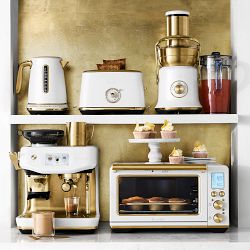
The current catalog fails Eliza by offering overly brief titles and descriptions that lack the detailed information she expects from a premium brand. For example, a product like 'Breville Brass Collection' leaves her guessing about the item itself, let alone its features, functionality, or the specific materials, hindering her ability to envision it in her home or justify its price. Similarly, the 'Plymouth Turkey Dinnerware Collection' lacks specifics on components or material, failing to address her need for quality assurance and comprehensive product understanding. This absence of critical detail directly clashes with her buying triggers related to quality and confidence, making her less likely to convert.
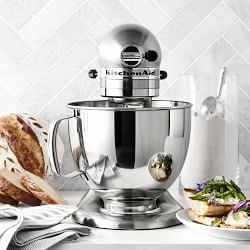
The current catalog descriptions are extremely brief, often just repeating the product name (e.g., 'KitchenAid® Artisan Stand Mixer, 5-qt.'). This minimalist approach creates a significant gap with Williams Sonoma's established brand voice, which emphasizes 'Elevated Quality,' 'Design Authority,' and 'Inspired Living.' The lack of descriptive language fails to convey superior craftsmanship, design nuances, or how products enhance home life, making them appear generic rather than premium. This misses opportunities to engage an affluent customer base that values detailed information and a curated, inspiring shopping experience.
To enhance the quality of life at home and beyond.



Issues ordered by cost. Expand any row for the evidence.
Customers cannot make informed purchasing decisions for high-value home goods and kitchenware when the only information they have is the product title.
criticalCustomers are highly visual, especially for home furnishings. A single image prevents them from assessing quality, features, and how the product fits into their home.
criticalYour premium products are not being found by potential customers actively searching for them, giving market share to competitors.
criticalCustomers cannot effectively filter, refine searches, or select product options (like color or size) from a single page, leading to frustration and exit.
criticalThe absence of strategic compare-at pricing, visible installment options, and urgency signals means you're not maximizing psychological triggers.
criticalCompetitors were identified based on existing brand intelligence and verified through web searches to ensure they operate in the U.S. market and sell products within the home/furniture category, specifically kitchenware and home furnishings. Catalog quality metrics were estimated by reviewing public web signals, including website content and industry analyses.
Competitor metrics are estimates from public web signals, not scraped catalog counts.
Weak titles (0%)
Thin descriptions (0%)
Thin descriptions (0%)
Insufficient images (0%)
Thin descriptions (0%)
Thin descriptions (0%)
Thin descriptions (0%)
Thin descriptions (0%)
Thin descriptions (0%)
Thin descriptions (0%)
Thin descriptions (0%)
Thin descriptions (0%)
Insufficient images (0%)
One ranked roadmap, three views. Phase 1 alone recovers the majority inside 2 weeks.
Weak image coverage reduces trust and makes products harder to evaluate.
Thin or missing descriptions force shoppers to guess why the product is worth buying.
Incomplete SEO fields limit how much organic traffic your existing catalog can capture.
Weak titles hurt search visibility and make products harder to understand at a glance.
Clearer product names that are easier to scan, search, and compare.
More complete PDPs that explain value, answer objections, and support conversion.
Richer PDPs with stronger visual confidence and fewer abandoned product views.
A more discoverable catalog with cleaner metadata and stronger search intent.
Enriched product descriptions increase PDP conversion rate
Keep 20% of products unchanged as a control group. Compare conversion rate, bounce rate, and revenue per session between optimized and control products after 30 days.
This feature can generate persuasive, SEO-rich, and benefit-driven descriptions from existing product titles and basic attributes, immediately tackling the most severe issue.
This will directly resolve the single-image problem by creating professional product photos, diverse lifestyle shots, and detailed close-ups, providing the visual richness your customers demand.
This feature will optimize all product titles for search and clarity, automatically rewriting them with SEO-optimized keywords and a consistent structure, enhancing discoverability.
This feature can automatically optimize meta tags, ensure SEO-friendly URLs, and significantly improve your catalog structure by allowing for comprehensive tagging and variant management. It identifies data gaps and suggests optimal ways to include variations.
To refine your pricing strategy, use Dondo's Competitor Analysis to understand how rivals are employing promotional pricing, bundles, and financing options. This intelligence can guide your implementation of strategic compare-at pricing and installment visibility.
Connect Dondo and this becomes your work surface.
23 products to fix. Dondo runs it in 1 minutes.