01
Add complete product image sets
Weak image coverage reduces trust and makes products harder to evaluate.
+$50/mo·20 products
We audited 50 of your 70 products. Your catalog scores 47/100 — top Mass-market fashion/merchandise brands hit 80. That gap is worth $81/month in unrealized sales.
“Your current score of 47/100 indicates that your catalog is significantly underperforming compared to the industry average of 55-65. By implementing the recommended changes, you have the potential to close this 8-18 point gap and move towards becoming a top performer, unlocking substantial revenue growth.”
Monthly revenue estimated from 70 products, $33 avg price, ~5K monthly visits scaled by catalog size, 2% conversion rate.
Formula: Sampled 50 of 70 products (×1.4 extrapolation). Losses combined multiplicatively: 1-(1-r₁)(1-r₂)(1-r₃)(1-r₄) to avoid double-counting.
Before we look at what's broken, we need to understand who reads your product pages and what they came for.
She's 40-50% of revenue of your revenue — and your product pages aren't answering her questions.
Concerns about strict return policies for non-defective items, fearing misjudged purchases.
Frustration over cancellation fees for unshipped orders, indicating a lack of flexibility.
Uncertainty about product sizing, fit, and exact material details due to generic descriptions and lack of size charts.
Express personal identity and publicly display her fandom for Markiplier and internet culture.
Acquire tangible, high-quality items that connect her to her favorite content creator and his community.
Support Markiplier while obtaining usable or wearable products that offer comfort, style, or a conversation starter.
New merchandise drops that are directly relevant to Markiplier's latest content or iconic moments.
The promise of unique, exclusive designs not available elsewhere, reinforcing her connection to the brand.
Reviews and testimonials emphasizing high product quality, durability, and print longevity after washing.
The current catalog's significant shortcomings directly impact Maya's buying journey. The complete absence of product variants (e.g., sizes, colors for apparel) and the prevalence of generic or missing product descriptions create significant friction. Maya values uniqueness and quality; however, without specific sizing charts, detailed material breakdowns beyond generic 'cotton-rich fleece,' or images showing fit on various body types, she cannot confidently assess if an item will meet her expectations. This uncertainty directly fuels her objections about strict return policies, as she's unable to make fully informed decisions pre-purchase. The catalog fails to reinforce the 'high-quality' and 'unique design' differentiators that are her key buying triggers.
The brand's stated mission is to 'bring life to your clothing and home art' with 'unique designs' that 'cannot be found anywhere else in this universe,' reflecting an 'Energetic & Playful' and 'Authentic & Original' voice. However, the product catalog descriptions are almost entirely generic, focusing solely on material specifications ('Heavyweight 8.25 oz. (~280 gsm) cotton-rich fleece') and fit ('Classic, generous, boxy fit'). They lack any specific Markiplier-related humor, references, or context that would appeal to the 'Fan-Centric' demographic. There's a missed opportunity to infuse product details with the energetic, authentic, and playful voice that defines the brand, making the catalog copy feel disconnected from the brand's vibrant identity and mission.
To create apparel and merch based on Markiplier for fans, focusing on unique designs, quality, and community connection, ensuring products cannot be found elsewhere and bringing life to clothing and home art.
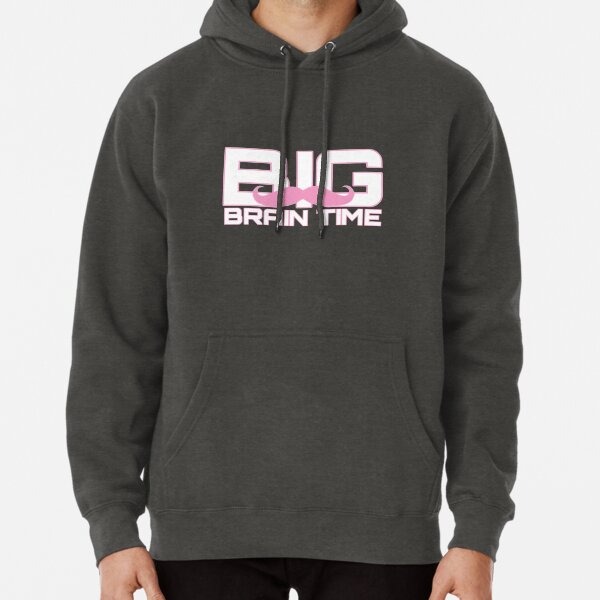

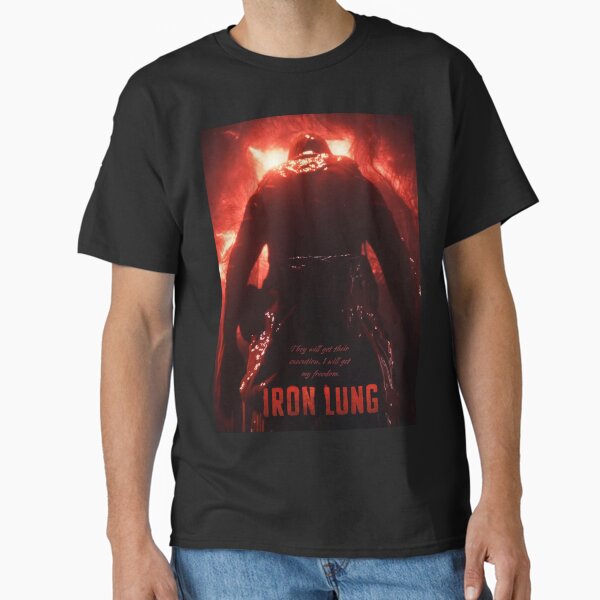

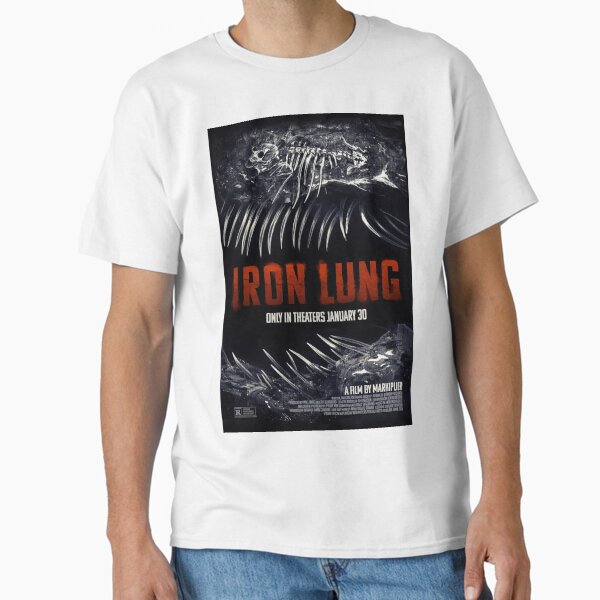

Issues ordered by cost. Expand any row for the evidence.
Customers cannot purchase apparel without selecting a size, making these products effectively un-buyable. This is the most critical issue, affecting all apparel products.
criticalProducts like "BIG BRAIN TIME | Markiplier Pink moustache Pullover Hoodie," "Priority Processing," and "Shipping Protection" are particularly affected.
criticalThis means customers can't easily find products through internal search or filtered navigation, and search engines have less context for ranking your products.
criticalProducts like "Unfathomable Depths Pullover Hoodie" and "Iron Lung Movie Classic T-Shirt" suffer from this, preventing customers from fully visualizing the product.
criticalThere are no visible "was/now" prices, limited-time offers, or multi-item bundles to encourage larger purchases or immediate action.
criticalIdentified known competitors from brand intelligence and verified their active e-commerce presence, product categories (mass-market fashion/merchandise), and market (US) via Google search. Estimated catalog quality metrics based on public web signals, including product descriptions, imagery, stated material quality, and brand voice evident on their websites.
Competitor metrics are estimates from public web signals, not scraped catalog counts.
Weak titles (0%)
Weak titles (0%)
Insufficient images (57%)
Insufficient images (40%)
Insufficient images (62%)
Weak titles (50%)
Weak titles (50%)
Thin descriptions (83%)
Weak titles (67%)
Weak titles (83%)
Weak titles (100%)
Weak titles (100%)
One ranked roadmap, three views. Phase 1 alone recovers the majority inside 2 weeks.
Weak image coverage reduces trust and makes products harder to evaluate.
Incomplete SEO fields limit how much organic traffic your existing catalog can capture.
Weak titles hurt search visibility and make products harder to understand at a glance.
Thin or missing descriptions force shoppers to guess why the product is worth buying.
Clearer product names that are easier to scan, search, and compare.
More complete PDPs that explain value, answer objections, and support conversion.
Richer PDPs with stronger visual confidence and fewer abandoned product views.
A more discoverable catalog with cleaner metadata and stronger search intent.
Enriched product descriptions increase PDP conversion rate
Keep 20% of products unchanged as a control group. Compare conversion rate, bounce rate, and revenue per session between optimized and control products after 30 days.
This tool can help identify and structure missing variant options (size, color, etc.) and apply them systematically across your apparel catalog. It can also analyze product details and suggest relevant tags, ensuring all products are properly categorized for improved discoverability and internal search.
This feature can generate persuasive, brand-aligned, and SEO-rich descriptions from your product titles and images, replacing generic text and filling in missing content for products like "BIG BRAIN TIME | Markiplier Pink moustache Pullover Hoodie."
This tool can create professional product photos, lifestyle shots, and backgrounds, helping you quickly achieve the recommended 3-5 images per product, showcasing items from multiple angles and in context.
This tool can rewrite your product titles to be keyword-optimized, consistent, and appealing to your target audience, while removing unnecessary identifiers.
Connect Dondo and this becomes your work surface.
17 products to fix. Dondo runs it in 1 minutes.