01
Expand product image sets (currently 1 per product, need 3+)
Weak image coverage reduces trust and makes products harder to evaluate.
+$2.8M/mo·6084 products
AITools.catalog-audit.report-v5.hero.sub
“Your catalog currently scores 32 out of 100, placing it significantly below the average for the general e-commerce industry (50-60). This indicates substantial room for improvement to catch up to competitors and unlock significant revenue potential. Top performers in your industry typically achieve scores of 75 and above, demonstrating the gap between your current state and market leaders.”
Monthly online revenue of $18.5M based on reported annual revenue of ~$222M USD FY2025.
Formula: Sampled 35 of 6084 products (×173.8 extrapolation). Losses combined multiplicatively: 1-(1-r₁)(1-r₂)(1-r₃)(1-r₄) to avoid double-counting.
AITools.catalog-audit.report-v5.act-2-divider.summary
AITools.catalog-audit.report-v5.persona.lede
Concerned about shipping costs and reliability, especially when sending gifts with specific delivery deadlines.
Wary of high prices, expecting comprehensive product details and maker stories to justify the cost of artisanal goods.
Frustration with incomplete or inconsistent product information that makes it difficult to assess uniqueness or ethical sourcing.
Find a thoughtful and memorable gift that reflects personal connection and stands out.
Ensure that her purchases align with her ethical values, supporting sustainability and fair practices.
Experience a seamless and trustworthy online shopping journey from discovery to delivery, especially for gifts.
Discovering truly unique, artisan-made gifts that carry a story and differentiate from mass-produced options.
The opportunity to support independent makers and contribute to ethical, sustainable practices through her purchase.
Clear and engaging descriptions that highlight the craftsmanship, materials, and the positive impact of her purchase.
The current catalog audit reveals that over half of products are missing descriptions, and titles are often too concise, lacking key attributes like 'handmade' or 'eco-friendly'. This directly hinders Eleanor's primary buying triggers and jobs-to-be-done. She seeks unique, ethically-sourced items with compelling maker stories; without comprehensive descriptions and rich titles, she cannot quickly discern these crucial details. This forces her to guess or move on, undermining her confidence in the product's value and ethical alignment, and reinforcing her objection about incomplete product information.
The catalog descriptions consistently reinforce Uncommon Goods' brand pillars of Curated Uniqueness, Conscious Craftsmanship, and Purposeful Gifting. Products are frequently introduced with mentions of their independent makers (e.g., 'JoAnn Stratakos' handmade mug,' 'Celine Zhou will put your special message on'), immediately connecting the item to its artisan and supporting the brand's mission to platform creators. Descriptions often delve into the emotional value or symbolism of the gift (e.g., 'connect in spirit,' 'Symbols of transformation,' 'tell someone special that you'd be lost without them,' 'Spark a little extra romance'), aligning with the thoughtful and meaningful aspect of their offerings. While the ethical and sustainable practices (like B Corp status or material choices) are not explicitly stated in every product snippet, the emphasis on handmade, unique, and often personalized items implicitly suggests a departure from mass-produced goods, aligning with the brand's broader values. The main opportunity for enhancement lies in subtly weaving in more direct mentions of sustainability or ethical sourcing details when applicable to a specific product, to fully leverage the 'Ethical Advocacy' pillar at every touchpoint.
To connect makers and their creations with shoppers looking for truly unique goods; to create a business that makes uncommon goods accessible to everyone; to provide a platform for independent artists and designers to showcase their work and connect with a wider audience.


AITools.catalog-audit.report-v5.act-3-divider.summary
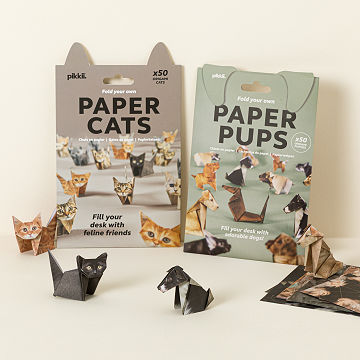
57% of products are completely missing descriptions, including 'Video Conference Mute Button', 'Paper Desk Pets', and 'Nighttime Reading Accomplice Booklight'.
criticalEvery single sampled product, including 'Long Distance Interactive Friendship Frame' and 'The Alphabet Vase', displays only one image.
criticalAll 35 sampled products have no tags, severely limiting internal search functionality and faceted navigation.
criticalProduct titles are short (average 31 characters), missing key attributes and keywords, e.g., 'Paper Desk Pets'.
criticalNo 'compare-at' prices for sale items like 'U.S. Whiskey History Glasses', and no visible urgency signals for promotions.
criticalCompetitors were identified by analyzing Uncommon Goods' core product categories (unique, artisanal, eco-friendly gifts and home goods) and its USA market. Initial known competitors were validated, and additional web searches were conducted for similar online retailers. Catalog quality metrics were then estimated for each competitor based on public web signals, general e-commerce best practices, and the observed focus and nature of their product offerings.
Competitor metrics are estimates from public web signals, not scraped catalog counts.
Thin descriptions (0%)
Insufficient images (0%)
Insufficient images (0%)
AITools.catalog-audit.report-v5.act-4-divider.summary
Weak image coverage reduces trust and makes products harder to evaluate.
Thin or missing descriptions force shoppers to guess why the product is worth buying.
Incomplete SEO fields limit how much organic traffic your existing catalog can capture.
Weak titles hurt search visibility and make products harder to understand at a glance.
Clearer product names that are easier to scan, search, and compare.
More complete PDPs that explain value, answer objections, and support conversion.
Richer PDPs with stronger visual confidence and fewer abandoned product views.
A more discoverable catalog with cleaner metadata and stronger search intent.
Adding 3+ images per product increases add-to-cart rate
Keep 20% of products unchanged as a control group. Compare conversion rate, bounce rate, and revenue per session between optimized and control products after 30 days.
Utilize the 'AI Description Writer' to generate persuasive, detailed, and SEO-rich descriptions for the 57% of products currently lacking them. This tool can quickly fill content gaps and ensure every product tells its unique story.
Deploy the 'AI Image Generator' to create a minimum of 3-5 diverse images per product. Focus on generating lifestyle shots, detail close-ups, and alternative angles to help customers visualize your unique products, such as 'Real NFL™ Uniform Friendship Bracelet' and 'Long Distance Interactive Friendship Frame.'
Implement the 'Listing Optimizer' to systematically add relevant and comprehensive tags to all products. These tags are crucial for internal search, faceted navigation, and helping customers find exactly what they're looking for, especially with a large catalog like yours.
Implement the 'AI Title Generator' to rewrite product titles, extending them to the optimal 50-80 character range. The tool can incorporate product type, key attributes, and target keywords to improve search visibility and click-through rates. For example, 'Paper Desk Pets' could become 'DIY Handmade Paper Desk Pets Kit for Kids - Eco-Friendly Craft Activity.'
While Dondo's 'Competitor Analysis' can inform strategy, manual implementation is key here. Clearly display 'compare-at' prices for all 'sale' items. Integrate urgency signals (e.g., 'Limited Stock,' 'Selling Fast') and explore prominent display of installment payment options for higher-priced items.
AITools.catalog-audit.report-v5.queue.lede
AITools.catalog-audit.report-v5.cta.recap