How to get your small business into engines like ChatGPT
Learn how small brands can stand out in AI engines with clear, useful, and well-structured content.
 By Dondo6 min read
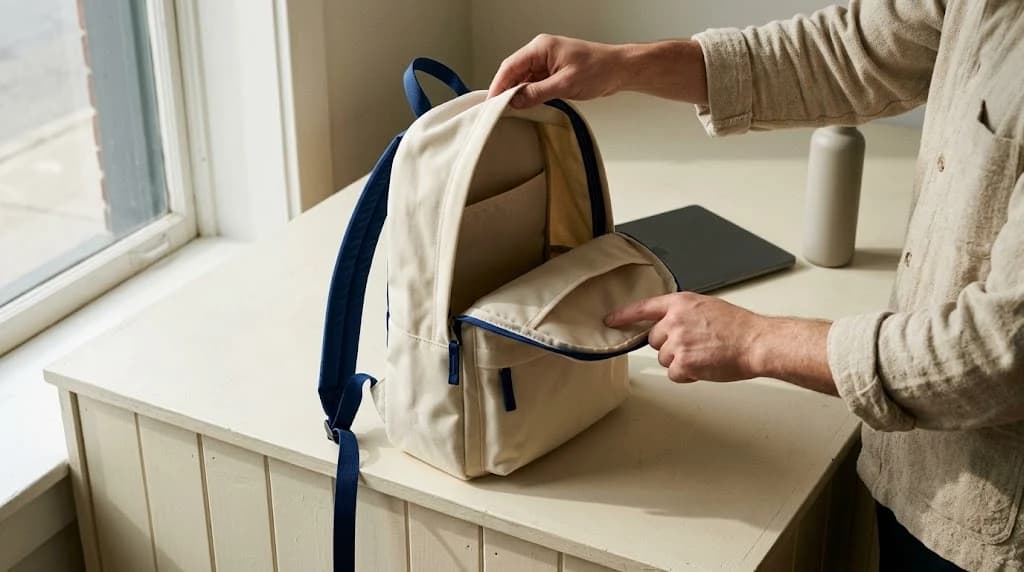
AEO for Small Brands: How to Compete with Giants Using AI
Online positioning is changing rapidly.
What used to be a race to appear on the first page of Google has now become a competition to be the answer provided by artificial intelligence engines. This is known as AEO (Answer Engine Optimization).
Small businesses can start with accurate product facts and useful answers to the questions their customers ask.
AI-powered services such as ChatGPT and Perplexity offer ways to explore questions about businesses and products. Google Search also offers AI Overviews and AI Mode. Google’s guidance is to keep following SEO fundamentals: help people find useful content through internal links and make important information available as text. These practices do not guarantee inclusion in AI answers.
What is AEO and why is it an opportunity for small businesses?
AEO (Answer Engine Optimization) describes efforts to make content useful for AI-powered answer experiences; it does not guarantee selection as an answer.
For Google’s AI features, existing SEO fundamentals still apply. A practical content review can focus on making answers:
- ☑️ Clear
- ☑️ Conversational
- ☑️ Specific
- ☑️ Focused on answering concrete questions
A small shop can use accurate product facts and helpful answers to distinguish its content. That alone does not determine search rankings or AI citations.
How to work on AEO without a marketing team
You don’t need a technical SEO or AEO team to start optimizing your content and website. Here are five practical and essential tips you can start applying today as a small business:
1. Create content that answers real questions
Gather the questions your customers ask on social media, chat, or reviews.
- Is this facial serum good for oily skin?
- What size laptop fits in this backpack?
- Is this blouse suitable for hot weather?
Then naturally incorporate them into your product descriptions or FAQ sections.
✏️ Example:
- This serum is a great option if you have oily skin. Its formula includes niacinamide, an ingredient that minimizes the appearance of pores and helps reduce oil production without drying out the skin.\
- Wondering what size laptop fits in this backpack? It has a padded compartment that protects devices up to 15.6 inches.\
- This blouse is lightweight, breathable, and perfect for hot days. The fabric allows airflow, making it ideal for warm climates.
Use enough detail to answer the buyer’s question accurately. A concise response can be useful, but its length or format does not guarantee selection by an AI service.
2. Use clear headings and structured lists
AI systems interpret content based on structure. To help them better understand each section, it's key to organize your content using proper heading levels (like H1, H2, H3), bullet points, and numbered lists.
Recommendations:
- Use a single H1 for the main page title
- Break the content into clear sections using H2
- Use H3 for sub-sections within each part
- When giving answers or explaining processes, go for bullet or numbered lists
✏️ Example:
How to wash this garment?\
- Hand wash with cold water\
- Do not use bleach\
- Hang dry in the shade
This not only improves your positioning, it also makes your content more useful and easier to read—for both shoppers and AI engines.
The Copywriter can do this for your store.
Rewrites titles, descriptions and bullets from what shoppers search.
Score my products free3. Add a Frequently Asked Questions (FAQ) section
Each product page can include at least 2 or 3 common questions with brief answers. Don’t underestimate this space: it’s a favorite spot for answer engines.
✏️ Example:
Is this product suitable for sensitive skin?
Yes, its formula is dermatologically tested and free from fragrances and alcohol.
Tip: Use natural language and avoid repeating what’s already in the product description.
4. Write in a conversational tone
You don’t need to sound like Wikipedia. You can use a tone that is friendly, professional, and clear. Write as if you were replying to a real customer’s message: direct, no fluff, and empathetic.
✏️ Example:
Instead of: Multifunctional and ergonomic bag.
Try: This bag is perfect if you need everything within reach on a long day—it has a special compartment for your water bottle, one for your keys, and enough room for a 14-inch laptop.
5. Use tools that automate this process
You don’t have to do everything manually. Tools like Dondo let you connect your store, generate your brand voice, and optimize your products for AEO and SEO automatically—without losing your brand’s identity.
👉 Explore Expert passes and Team pricing
Common AEO mistakes (and how to avoid them)
Although AEO seems simple, it’s easy to make mistakes that reduce its impact. Here are some of the most common:
- Using overly technical or vague language: Generic or overly formal phrases don’t connect with AIs—or with users.
- Ignoring FAQs: Skipping this section is missing out on a great opportunity to answer specific questions.
- Poor content structure: A wall of text without hierarchy or lists is harder for AI systems to understand.
✅ Solution: Write clearly and directly, include relevant FAQ sections, and structure all your content with logic and clarity.
How small brands can stand out with AEO
- Well-defined niche: If your store targets a specific segment, you can create more relevant and detailed content than a general big brand.
(A vegan beauty store can answer questions like whether a product is carmine-free.) - Authentic product knowledge: As a founder or small team, you know your product inside and out. That hands-on experience translates into more accurate and helpful descriptions.
(You can confidently explain how to adjust a belt you handcrafted yourself or describe the real feel of a fabric.) - Agility to adapt and improve: Unlike large brands that require approvals and long processes, you can update your content right away.
(If a customer leaves a review with a new question, you can answer it directly in the product description within minutes.)
Conclusion
AEO is redefining the rules of the game. It’s no longer just about who has the biggest site or the biggest budget. It’s about who answers better.
And in that, small brands have a big opportunity.
If you want to start optimizing your products for AI engines today, try Dondo for free and let artificial intelligence work in your favor.
The Copywriter can do this for your store.
Rewrites titles, descriptions and bullets from what shoppers search.
Score my products freeRelated Posts
 Ecommerce and Dropshipping Guide
How to adapt one product for different sales channels
Keep one verified set of product facts while adapting titles, descriptions, attributes, and images for each store or marketplace. Follow a worked example.
5 min read
 Ecommerce and Dropshipping Guide
How to choose your first products to improve with Dondo
Turn your first Analyst findings into a manageable product group. Weigh business importance, verified content gaps, stock, and facts you still need to confirm.
5 min read
 Ecommerce and Dropshipping Guide
Measure SEO changes after editing a group of product pages
Build a small product-page measurement worksheet using Search Console and store analytics. Compare a baseline, inspect query changes, and keep attribution limits clear.
6 min read
 Ecommerce and Dropshipping Guide
Product facts that answer specific AI shopping questions
Work through variant, compatibility, and use-case questions to find the product facts your catalog needs before you draft clearer copy for shoppers and AI search.
5 min read